-
 Email Us justwellautomation@qq.com



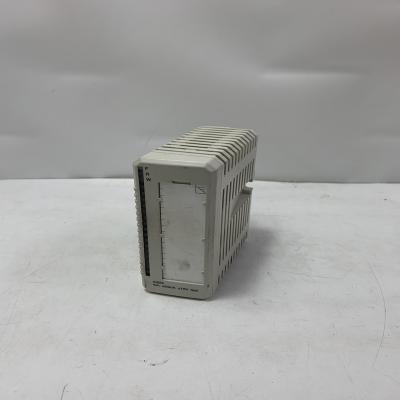
SCHNEIDER LC1D25P7 TeSys D Contactor
Item NO.:
LC1D25P7Payment:
T/TPrice:
$650Product Origin:
JapanColor:
NEWProduct weight:
0.21KGLead Time:
In stockWe will arrange delivery within 3-5 days after receiving the payment.
Our express delivery: DHL and FedEx.
Quality packing for each product
Destination country all taxes & duty to be paid by buyer
Only part of the brand and model, if you have other product needs, please contact us.

The Schneider Electric LC1D25P7 is a TeSys D three-pole contactor designed for switching and controlling electric motors and other industrial electrical loads. It features three normally open main contacts, a 230 V AC control coil, and built-in auxiliary contacts for control and signaling circuits.
|
Parameter |
Specification |
|---|---|
|
Brand |
Schneider Electric |
|
Model |
LC1D25P7 |
|
Product Series |
TeSys D |
|
Product Type |
AC Contactor |
|
Number of Poles |
3 |
|
Main Contact Configuration |
3 NO |
|
Rated Operational Current (AC-3) |
25 A |
|
Rated Current (AC-1) |
40 A |
|
Coil Voltage |
230 V AC, 50/60 Hz |
|
Motor Rating |
11 kW at 380–400 V AC |
|
Rated Operational Voltage |
Up to 690 V AC |
|
Built-in Auxiliary Contacts |
1 NO + 1 NC |
|
Rated Impulse Withstand Voltage |
6 kV |
|
Mounting |
DIN rail or screw mounting |
|
Application |
Motor control and resistive loads |
Three-pole switching for three-phase motors.
25 A AC-3 current rating for motor-control applications.
230 V AC coil compatible with matching control circuits.
Built-in 1 NO + 1 NC auxiliary contacts.
Supports AC-1, AC-3, and AC-4 utilization categories.
Designed for industrial control panels and motor starter assemblies.
Industrial motor starting and stopping
Pumps and compressors
Conveyor systems
HVAC equipment
Industrial machinery and automation panels
Confirm the control circuit supply is 230 V AC, 50/60 Hz.
Select the contactor based on motor current, voltage, and utilization category.
Use appropriate overload and short-circuit protection.
Verify terminal wiring and mounting requirements before installation.
Installation should be performed by qualified electrical personnel.
 All Categories